
The Steel Yard

“As a listed entry on the National Register of Historic Places, the Steel Yard is certified as a significant monument of the past. But the best thing about it is that it’s alive in the present.”
— Robert Campbell, Landscape Architecture Magazine
The Steel Yard
-
The Steel Yard
-
3 Acres
-
Morris Beacon Design, civil engineers
EA Engineering, environmental engineers
Structures Workshop, structural engineers
Griffith + Vary, electrical engineers
KMDG, landscape architect -
Cultural + Adaptive Reuse
-
Christian Phillips Photography
Annali Kiers
Providence, RI

Brownfield Remediation
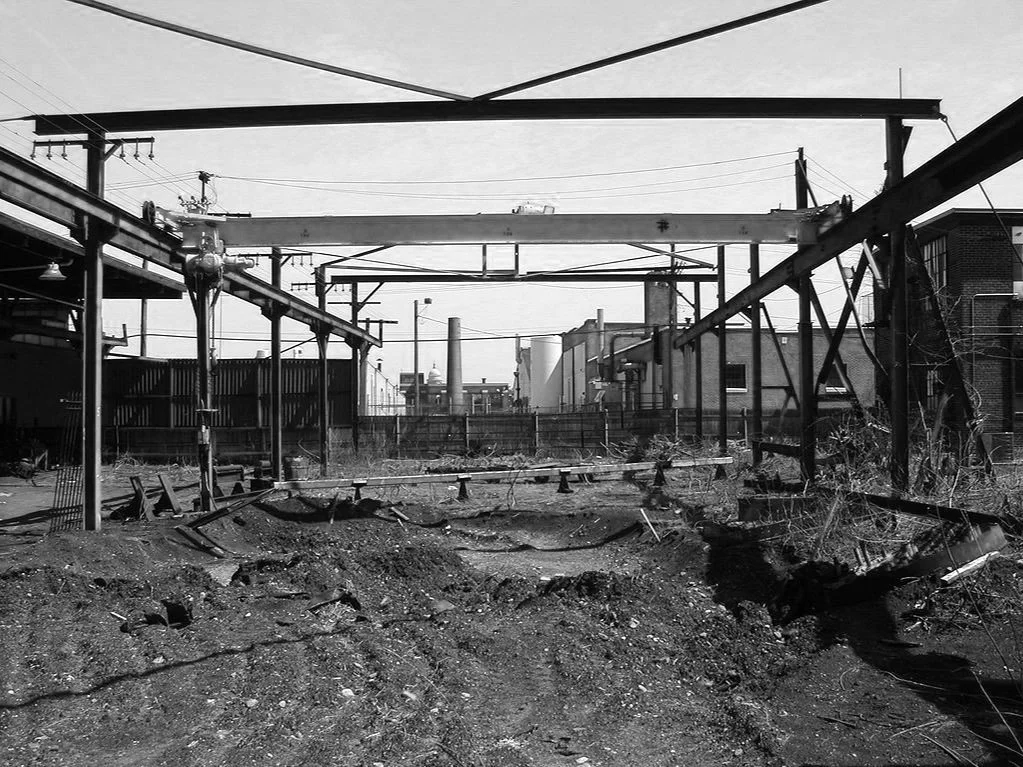
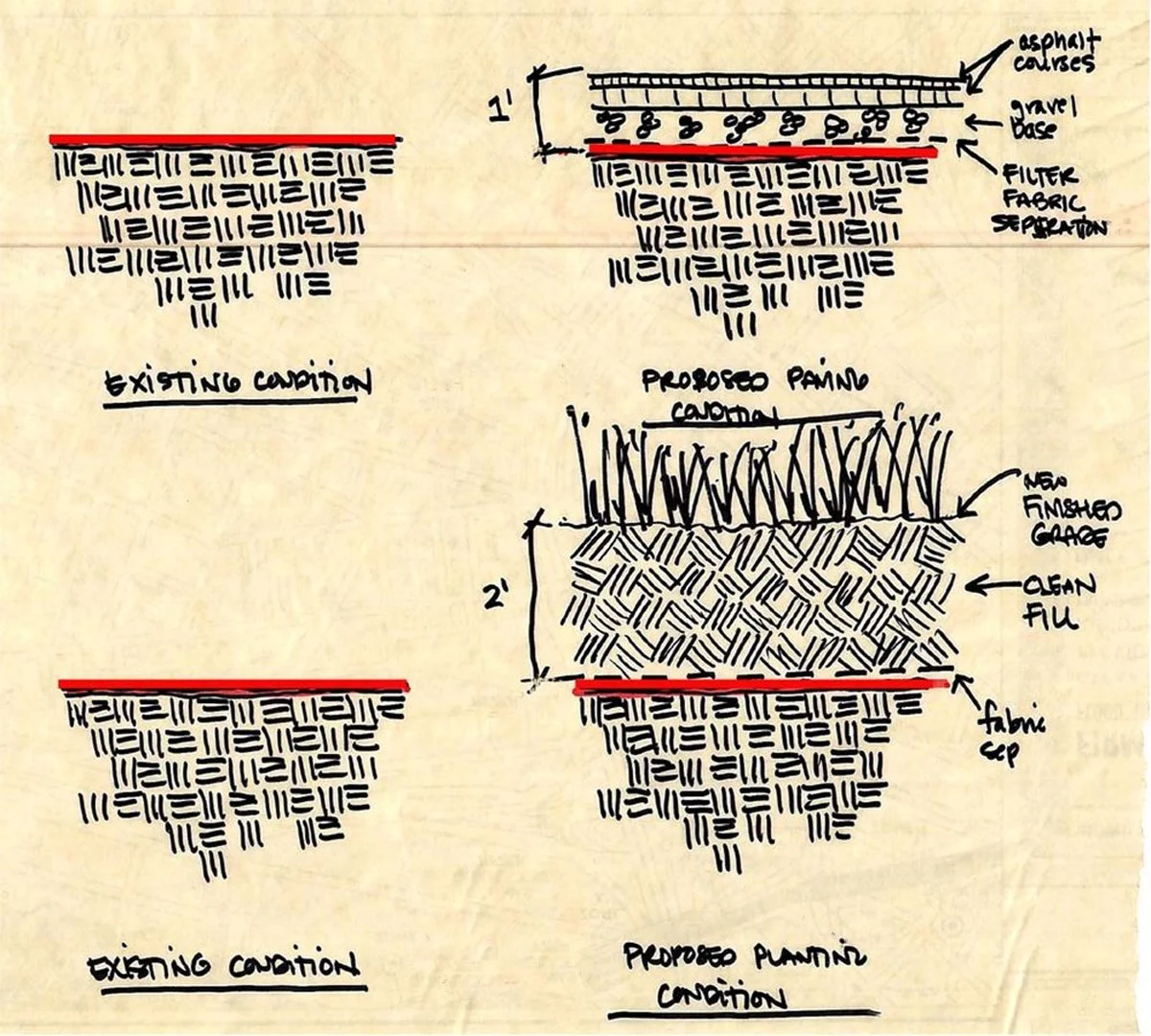
Faced with an expensive and comprehensive brownfield cleanup to allow the site to be used as envisioned, the Steel Yard and KMDG negotiated environmental requirements while leveraging limited funds to meet programmatic needs and leave room for the organization’s future growth. A strategy of extraction, capping and aggregation was used to contain contaminated soils. Environmental remediation standards required the extraction of a small amount of soil with lead contamination higher than 10,000 ppm and some chromium contamination. The remaining contaminated soil was treated with a binder to allow it to remain on site, rather than being exported to become a problem elsewhere. A cap of 12 inches of clean fill or pavement was required across the entire site.
Project Background
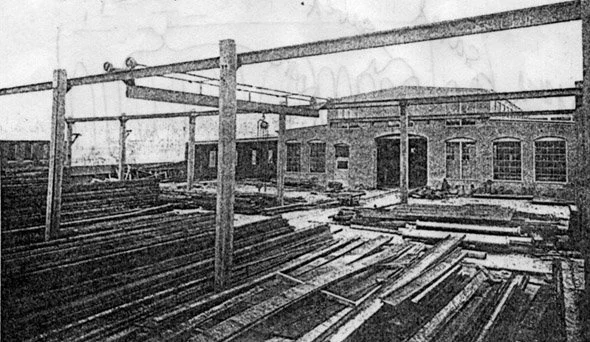
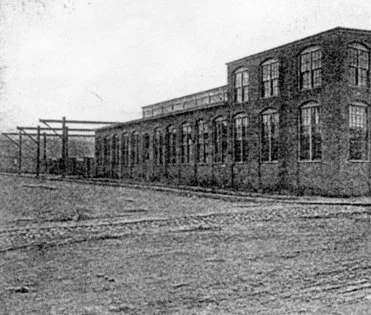
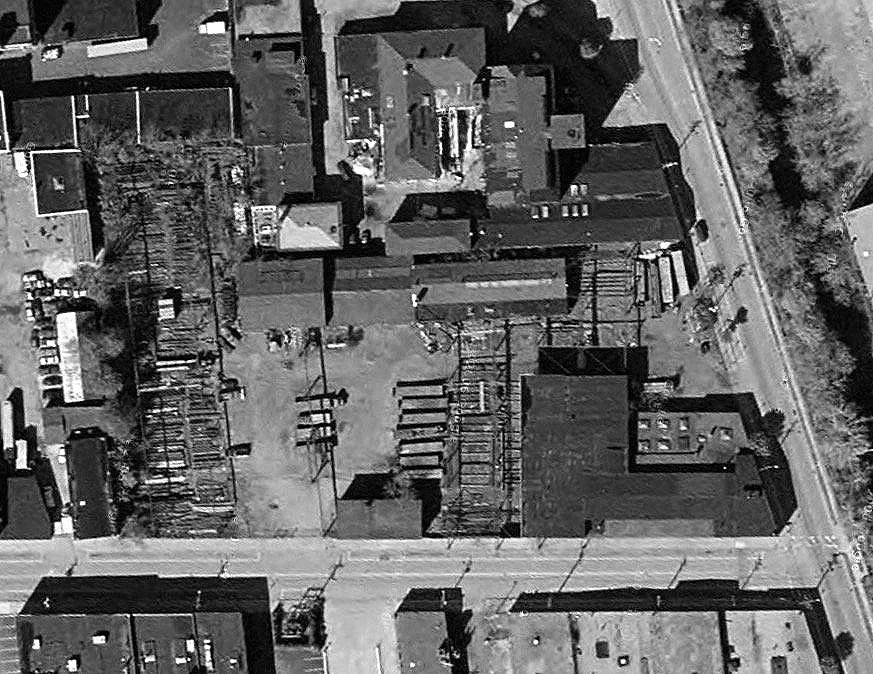
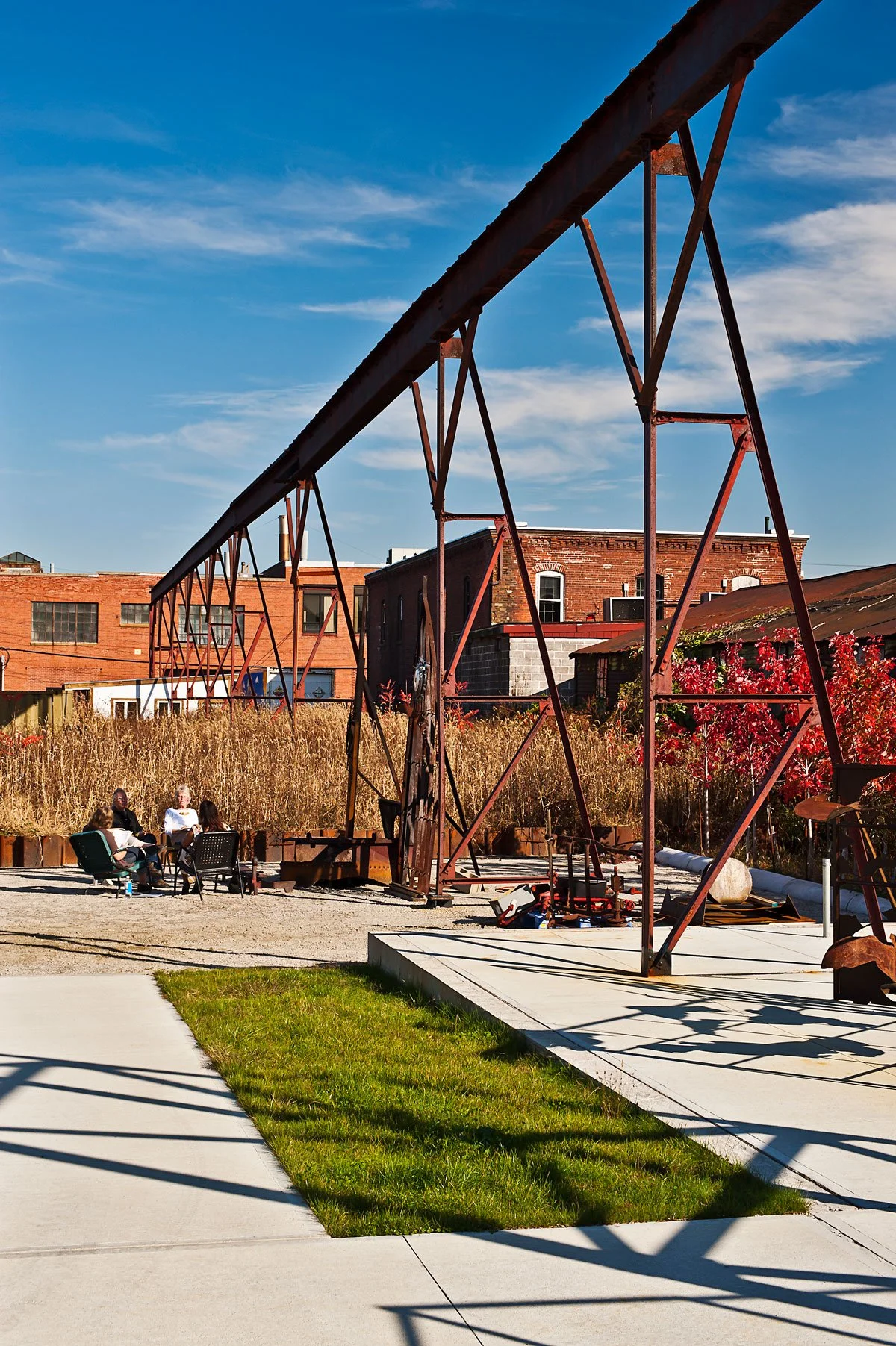
In 2002, the founders of the Steel Yard, an arts-based non-profit, purchased a vacant steel fabrication facility with a vision of repurposing it into a community space for local artists. The intent was to embrace and reuse the three industrial buildings on site and repurpose the five sets of overhead gantry cranes. The client also wanted the project to be a model for sustainable redevelopment.
Overall Site Design
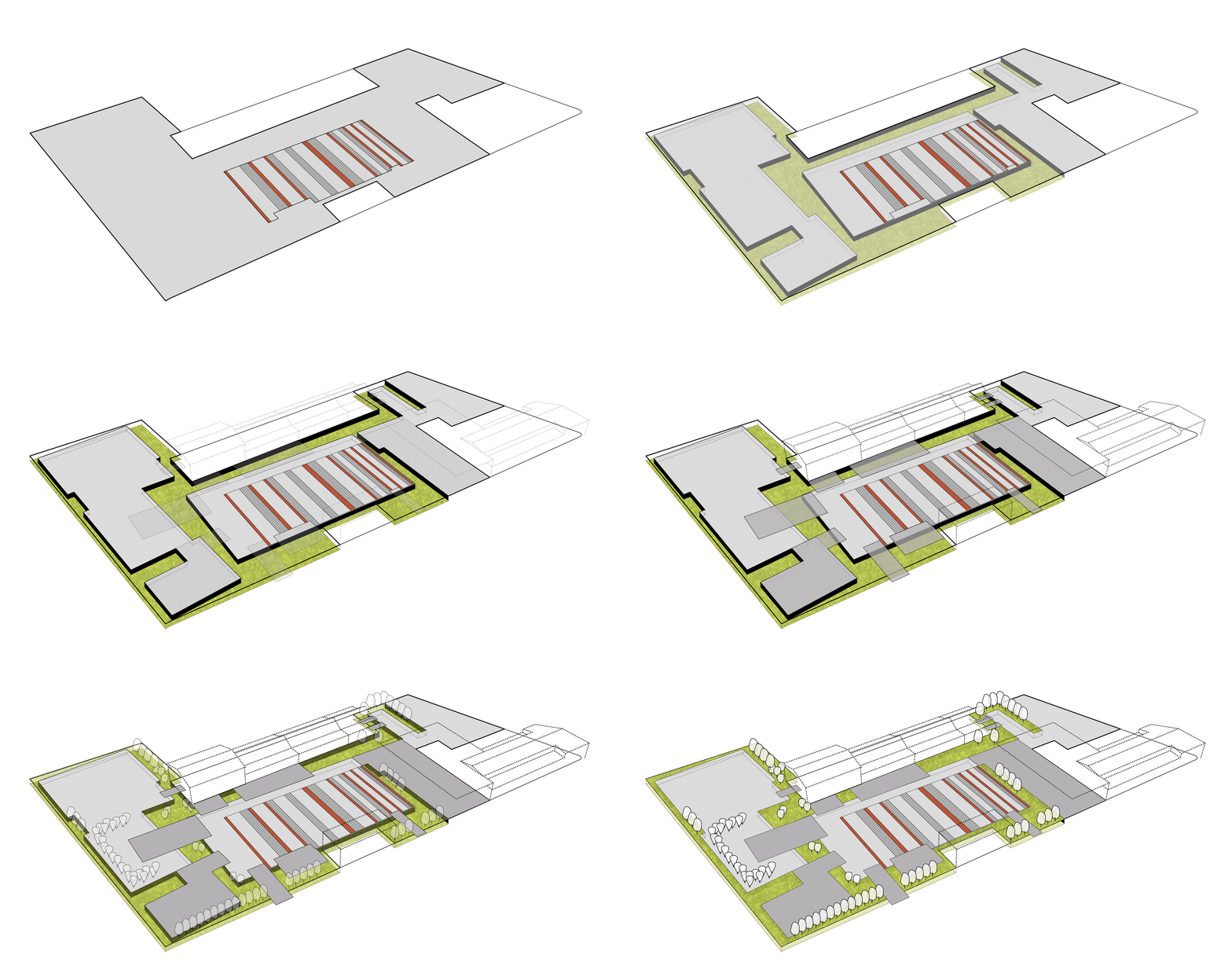
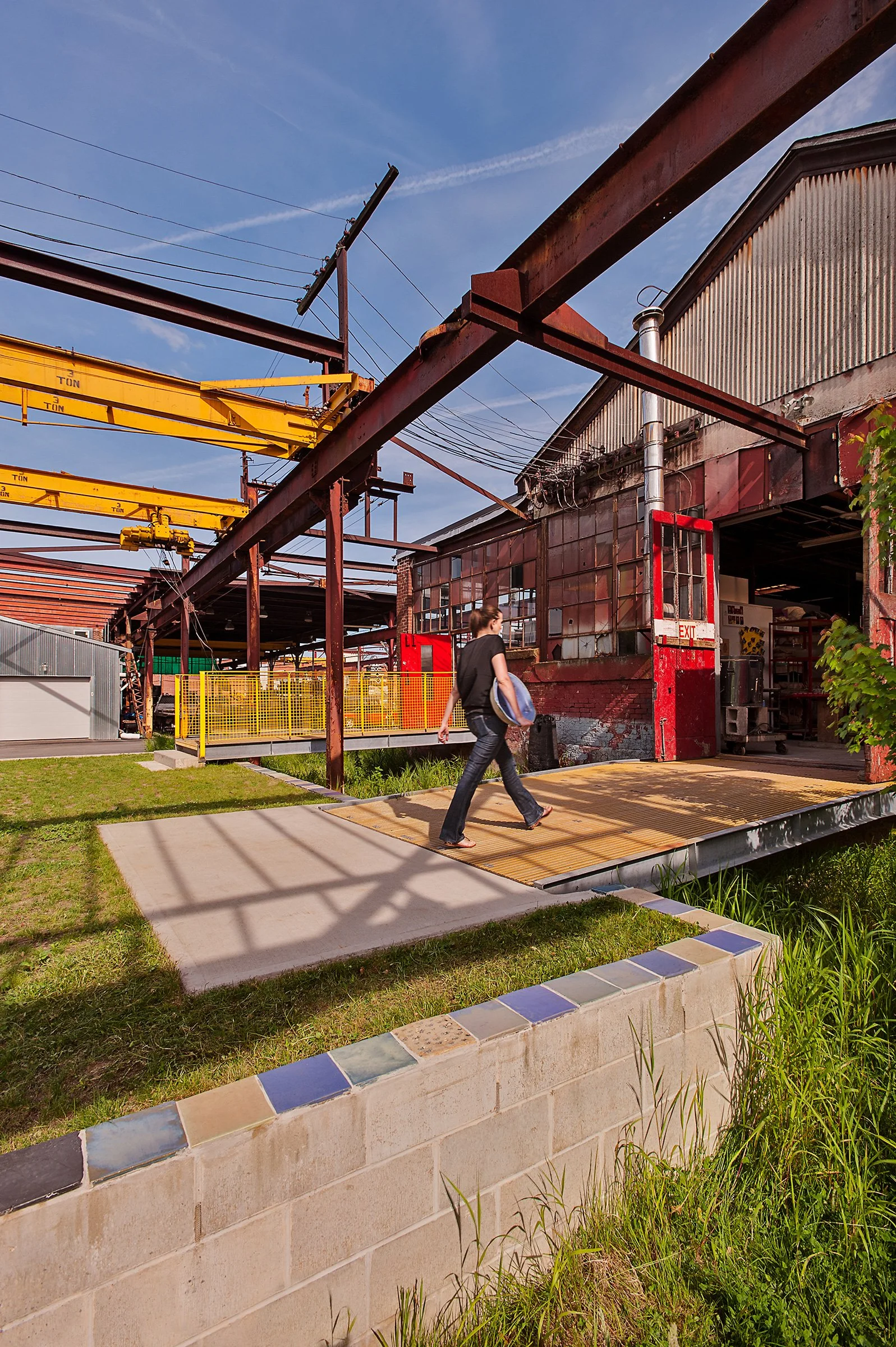
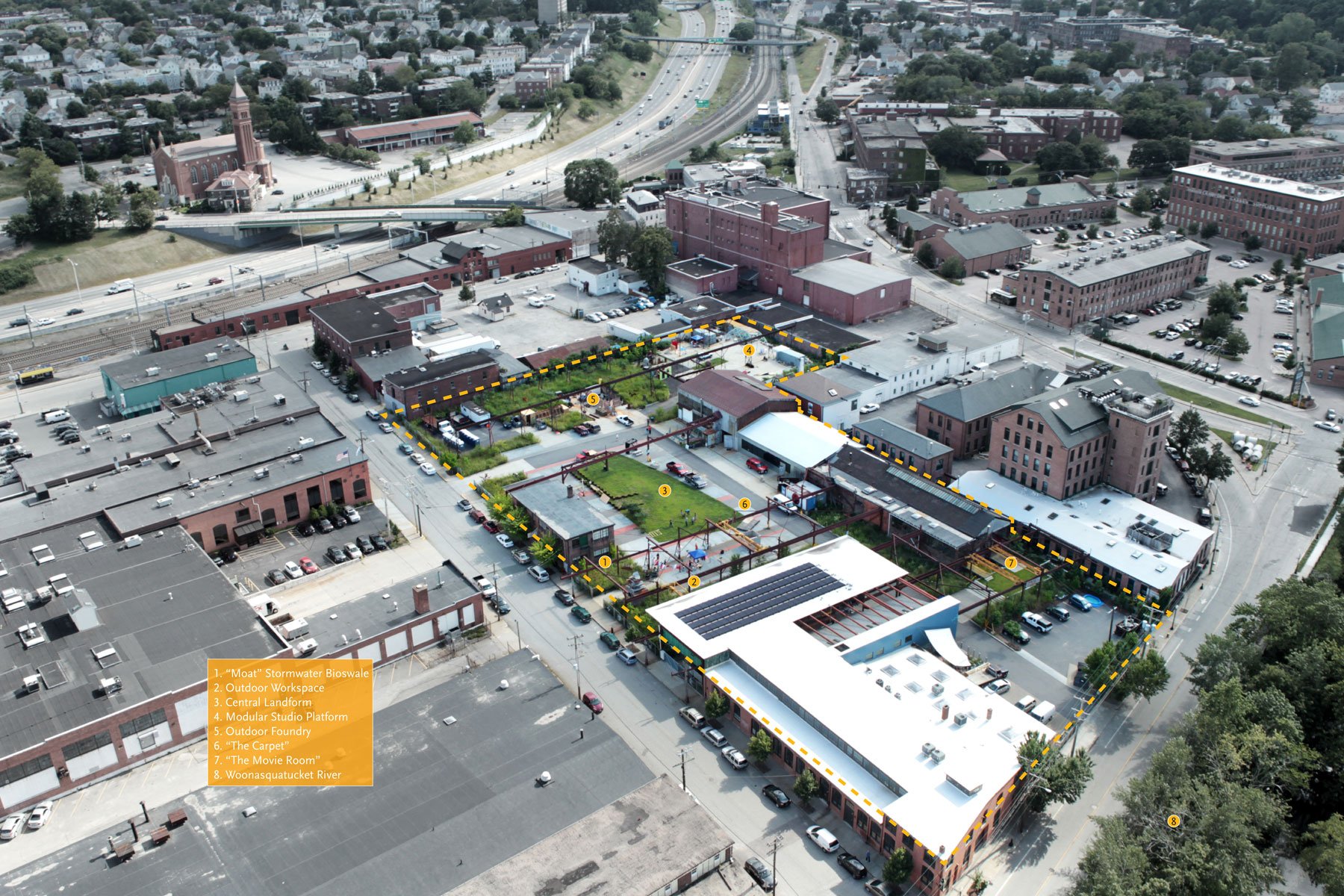
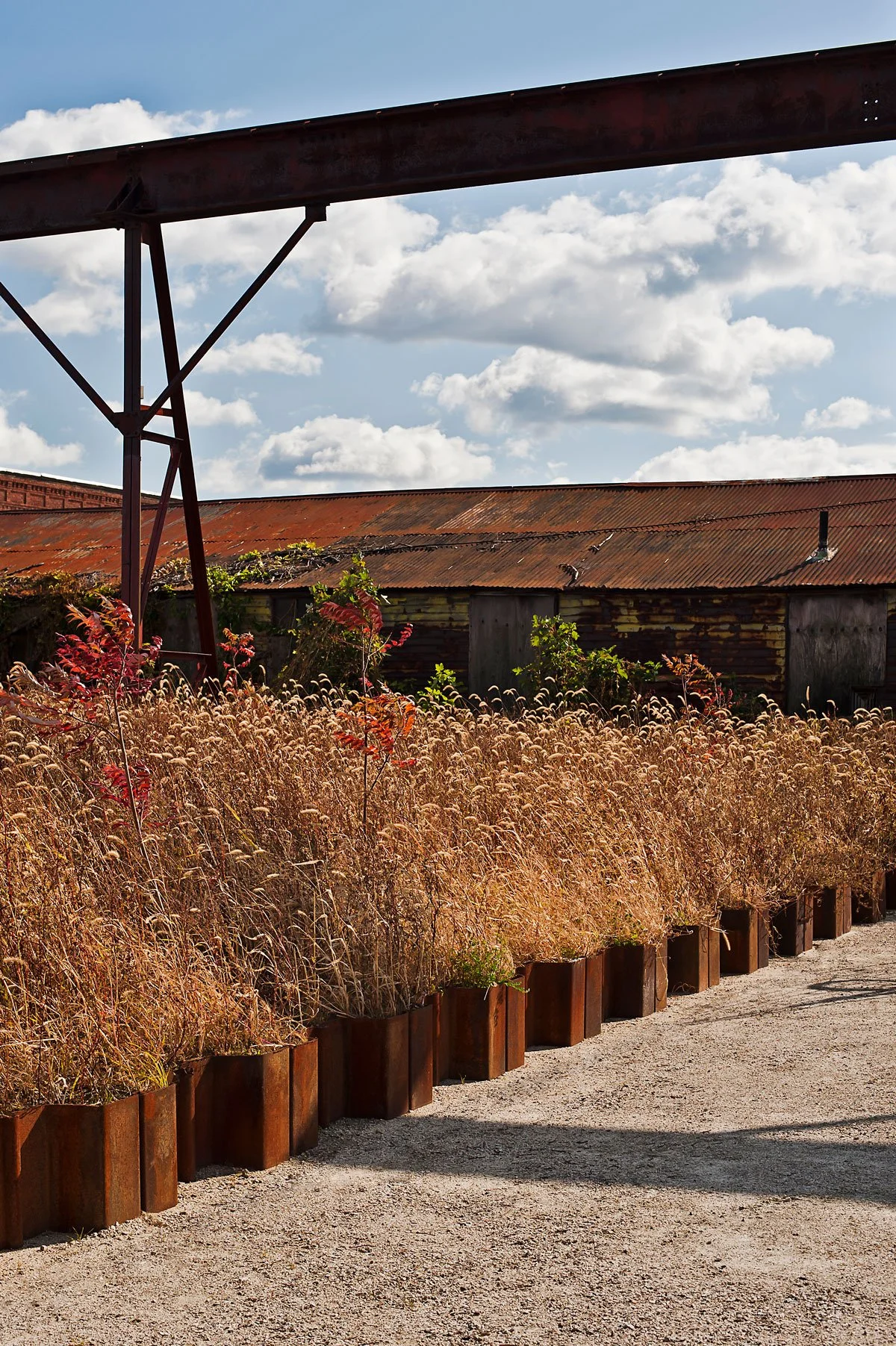
Competing interests in large paved surfaces for outdoor workspace and vehicular movement and the desire for a sustainable campus without large expanses of impervious pavement are the driving forces behind the design. To achieve the competing goals, the landscape design is centered on a paved plane, and a ‘carpet’ weaves together heavy- and light-duty pavements and impermeable and pervious materials. The margins beyond the pavement act as ‘stormwater moats’ infiltrating runoff and providing habitat for volunteer vegetation.
Program
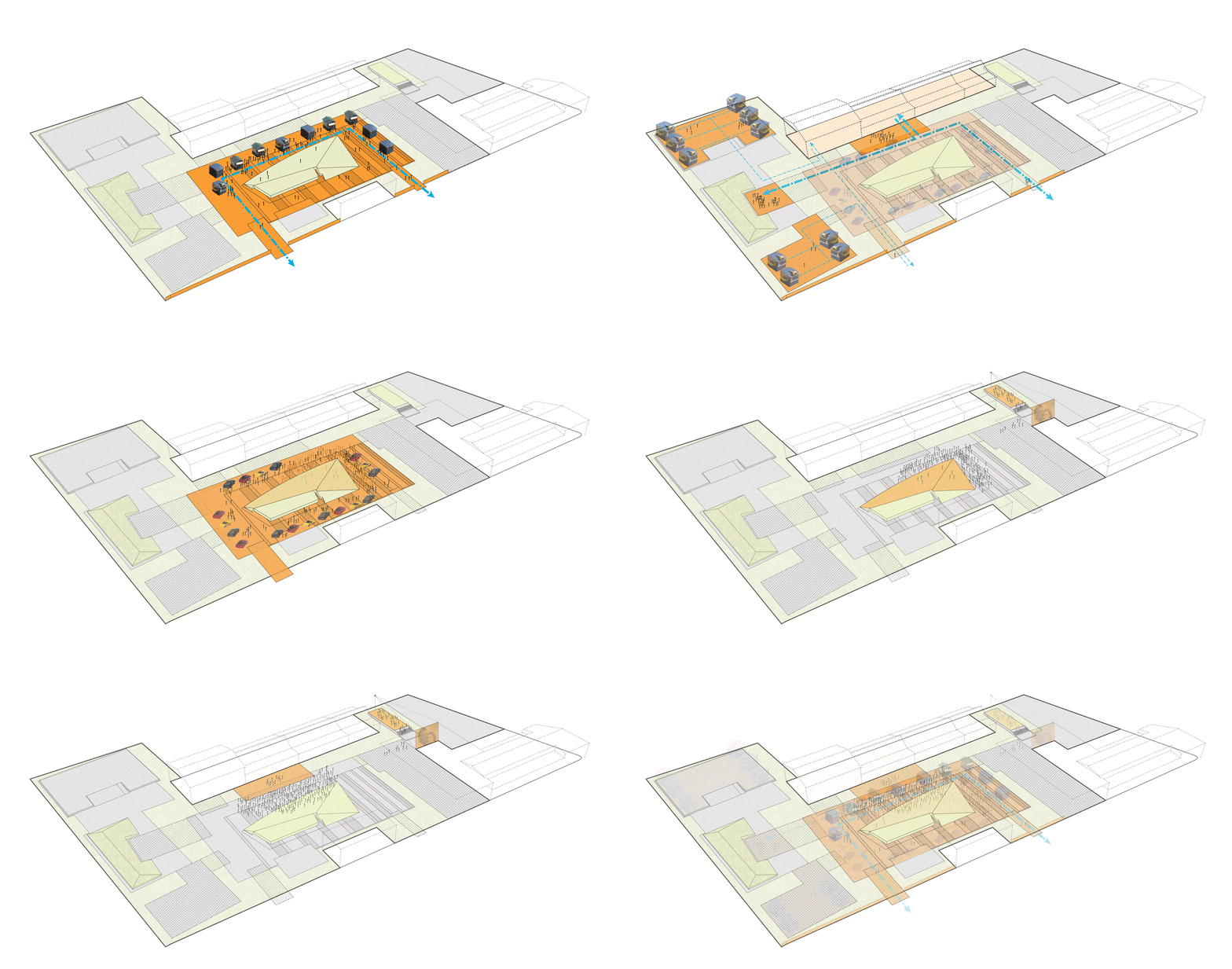
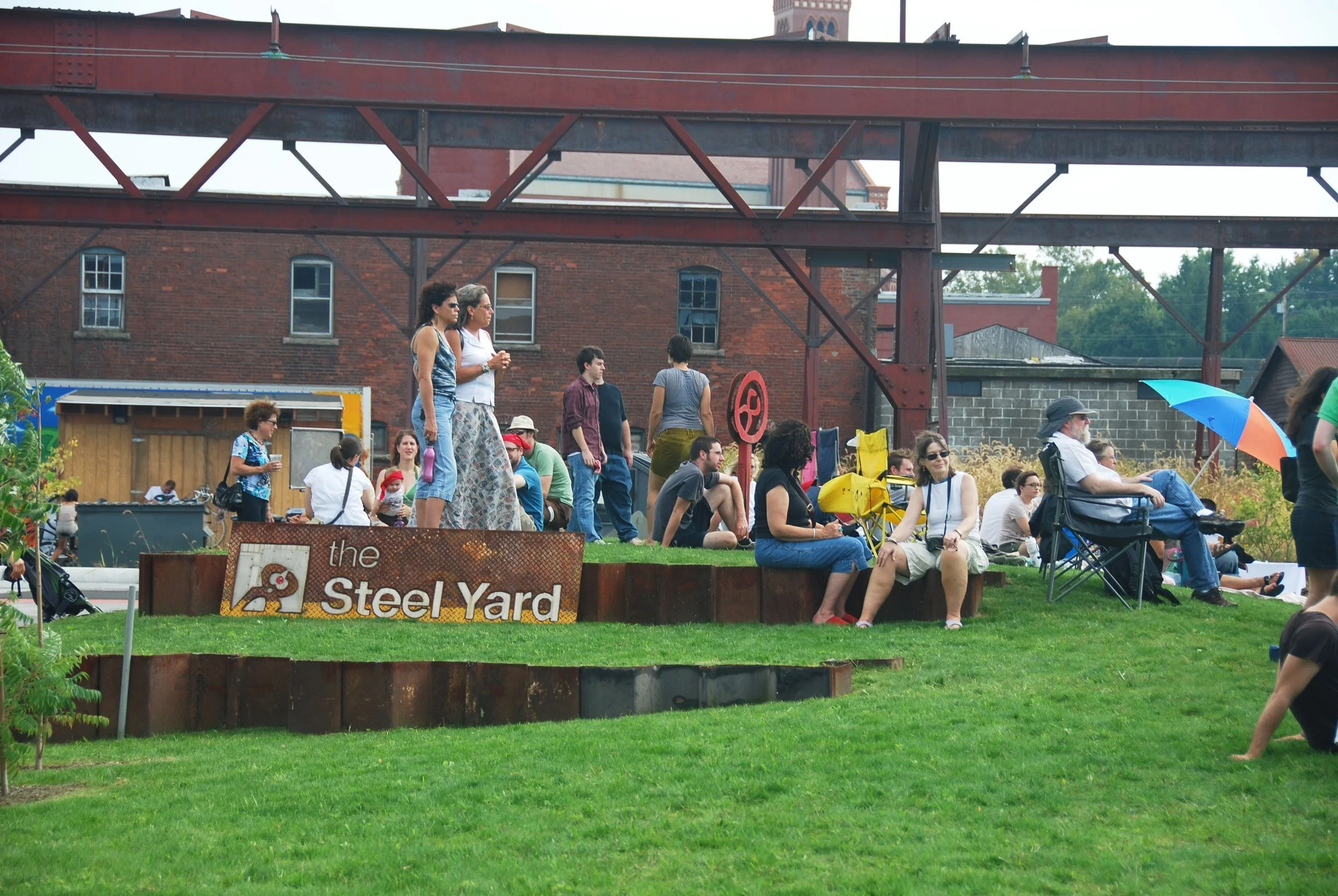
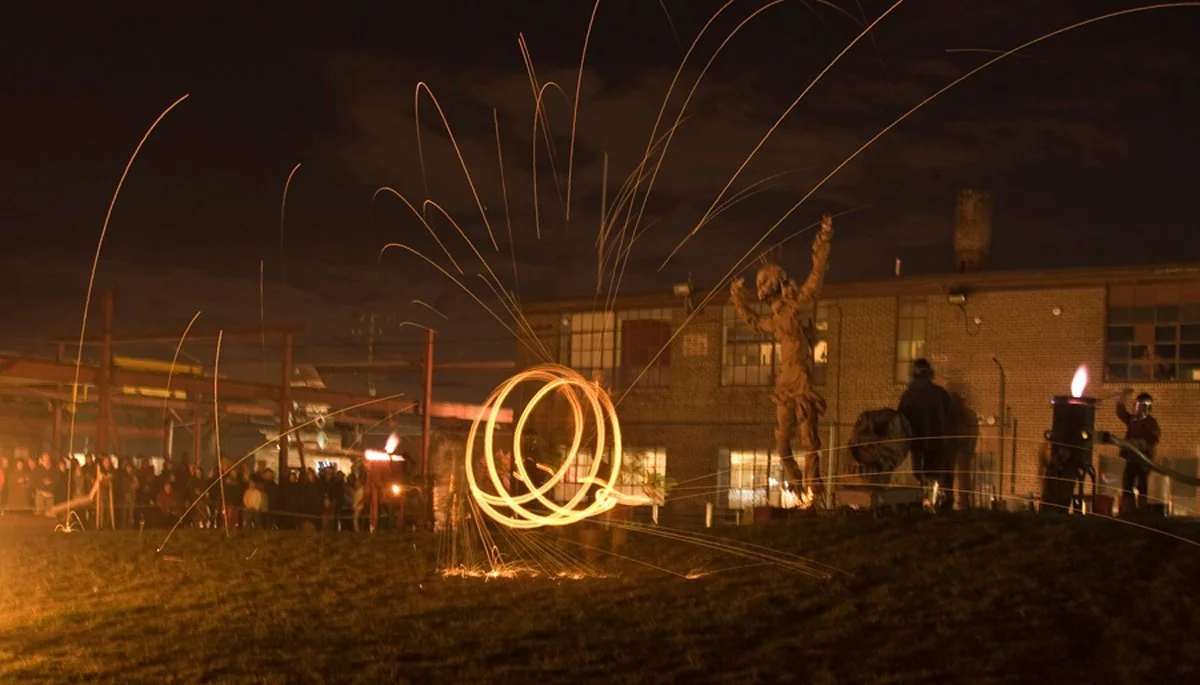
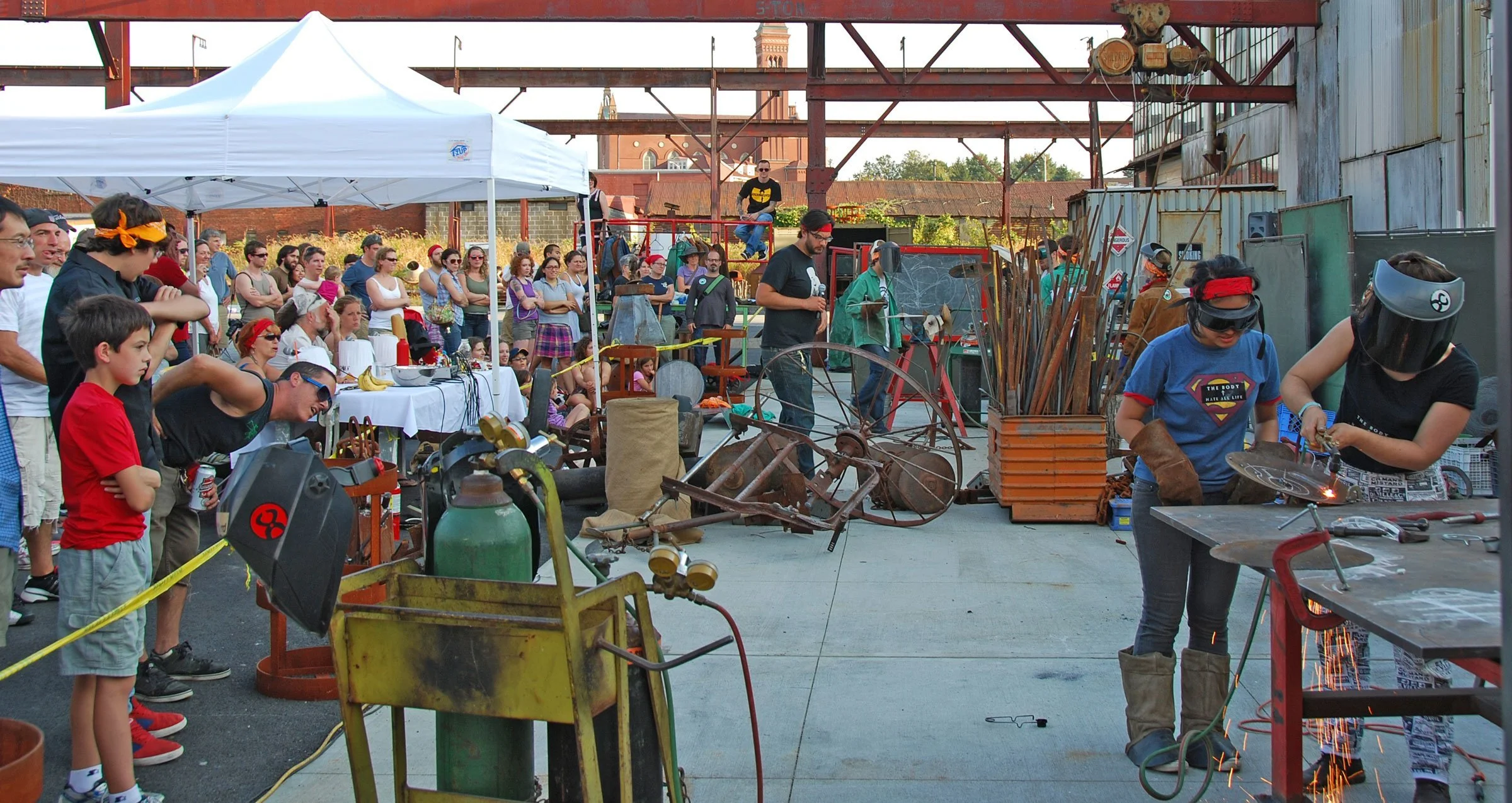
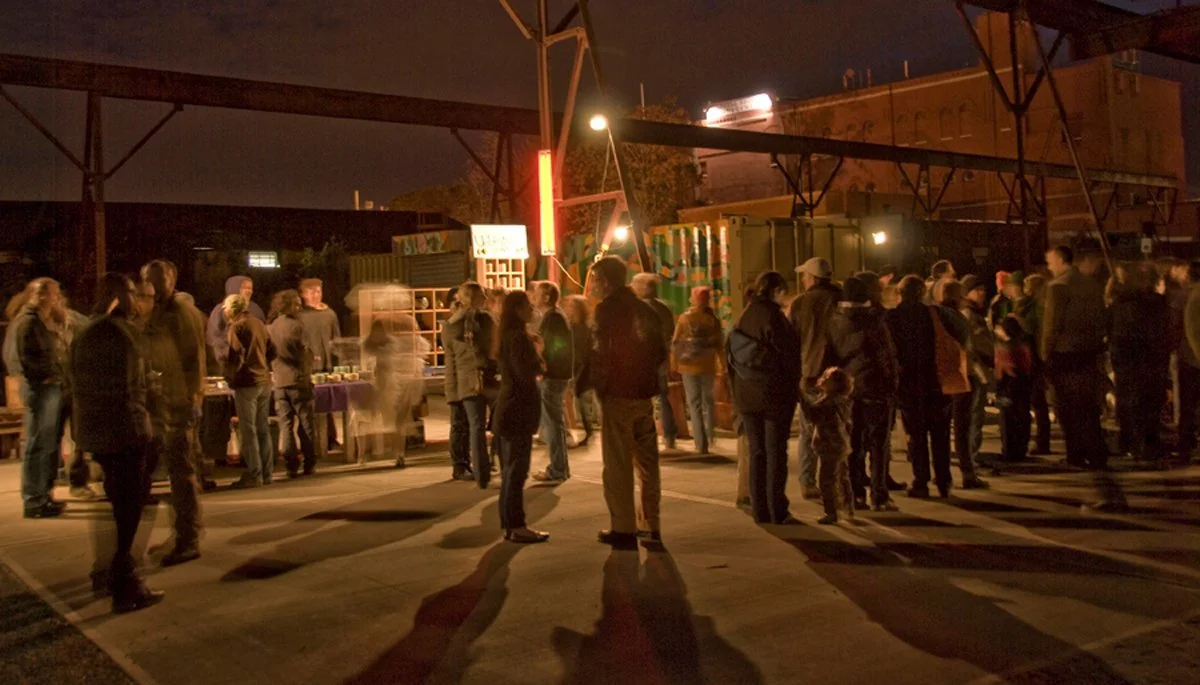
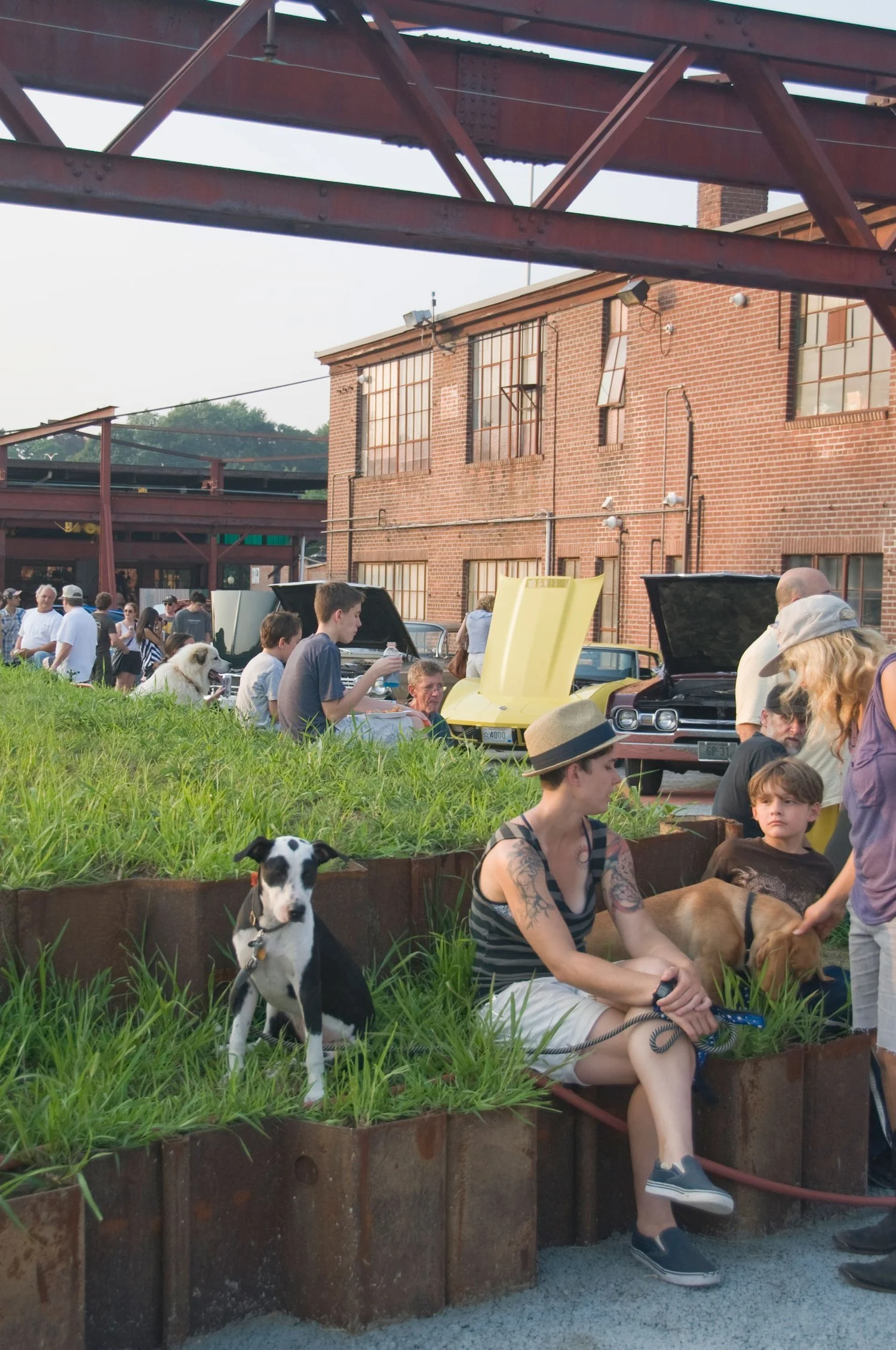
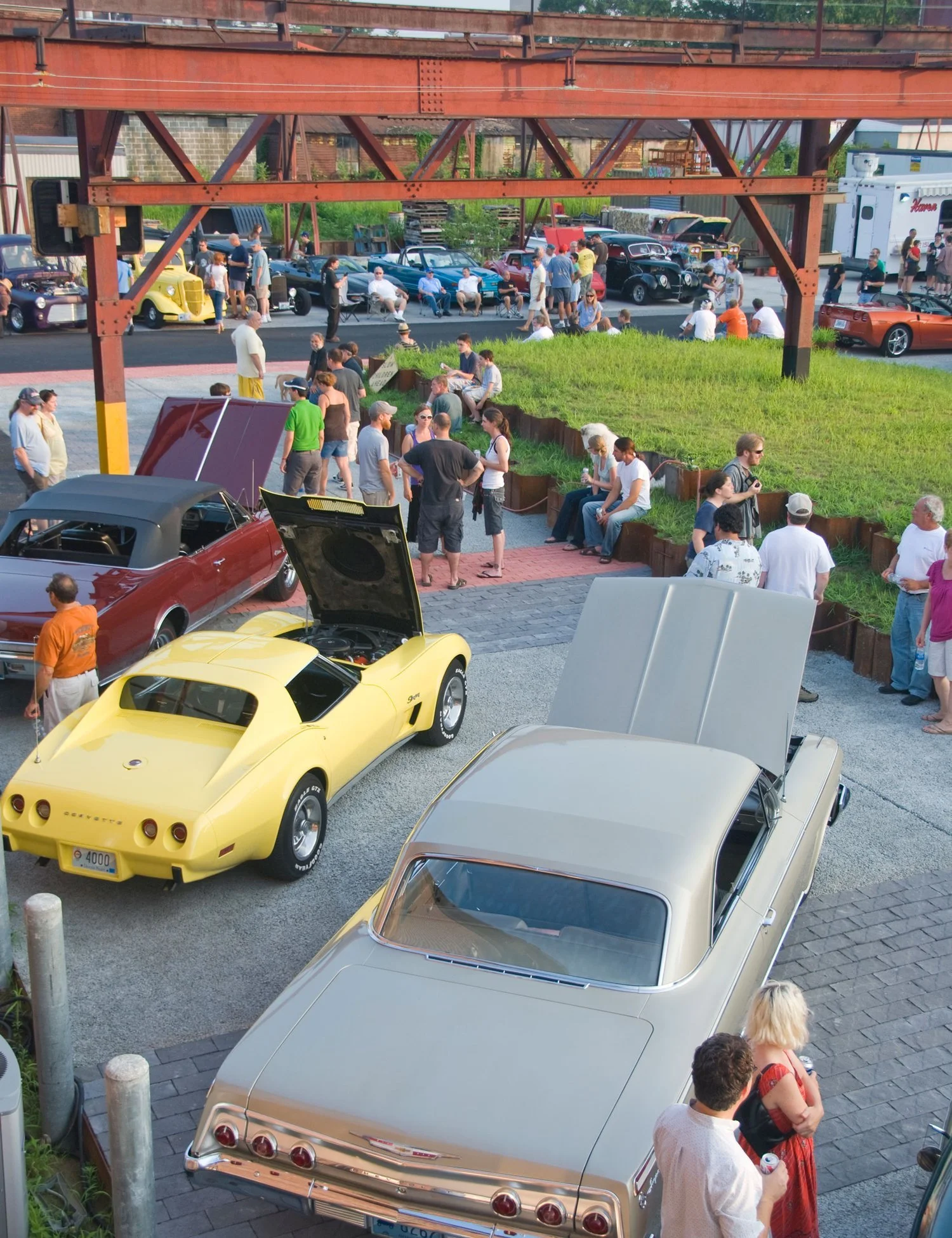
A primary central space defines the landscape and allows for individual and group work, as well as staging large events with audiences of up to several hundred, including car rallies, farmer’s markets, etc., whose character defines a sense of place. This is surrounded by secondary workspaces, including interior/exterior spill-out shop spaces, an outdoor foundry, a ‘hang-out’ space for movie nights and relaxation, and a future visiting artist’s studio (each ~1000-2000 sf). Tertiary service spaces include storage for raw materials and finished art pieces, a paved space serving incubator businesses and artists in shipping container studios, and 20 parking spaces.
Design for Resiliency
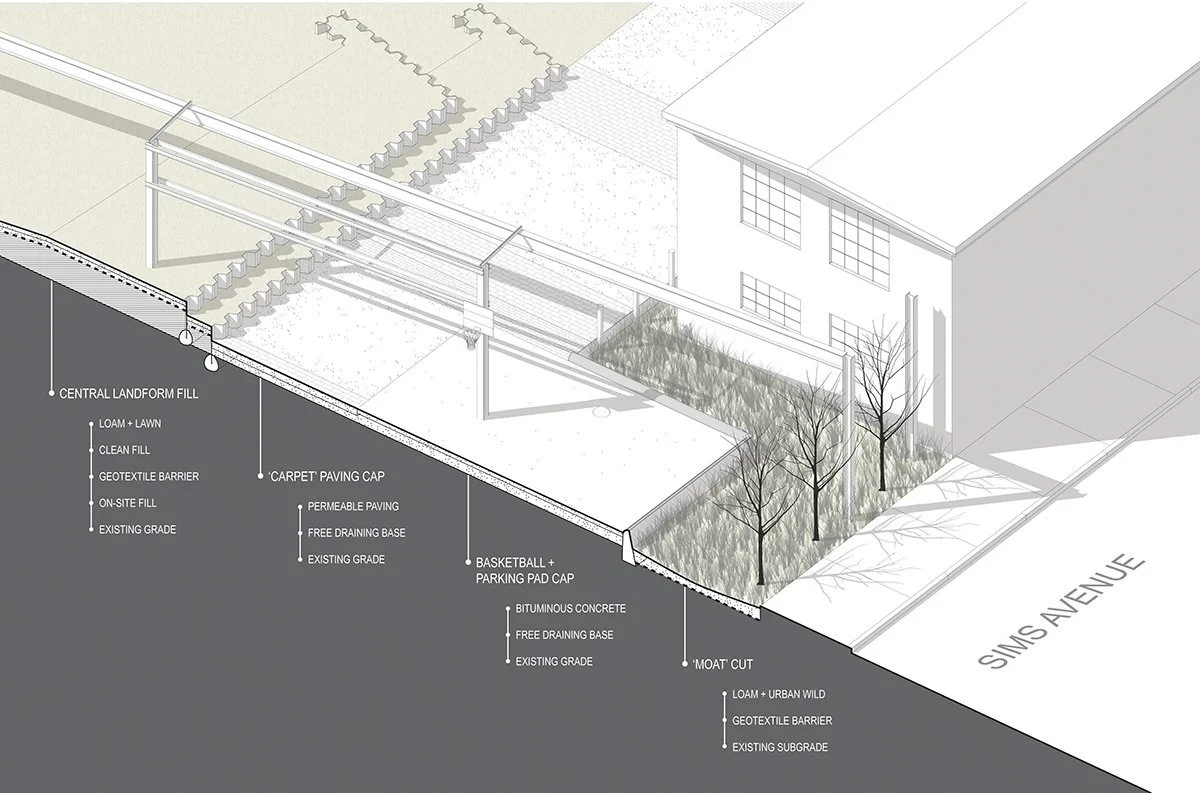
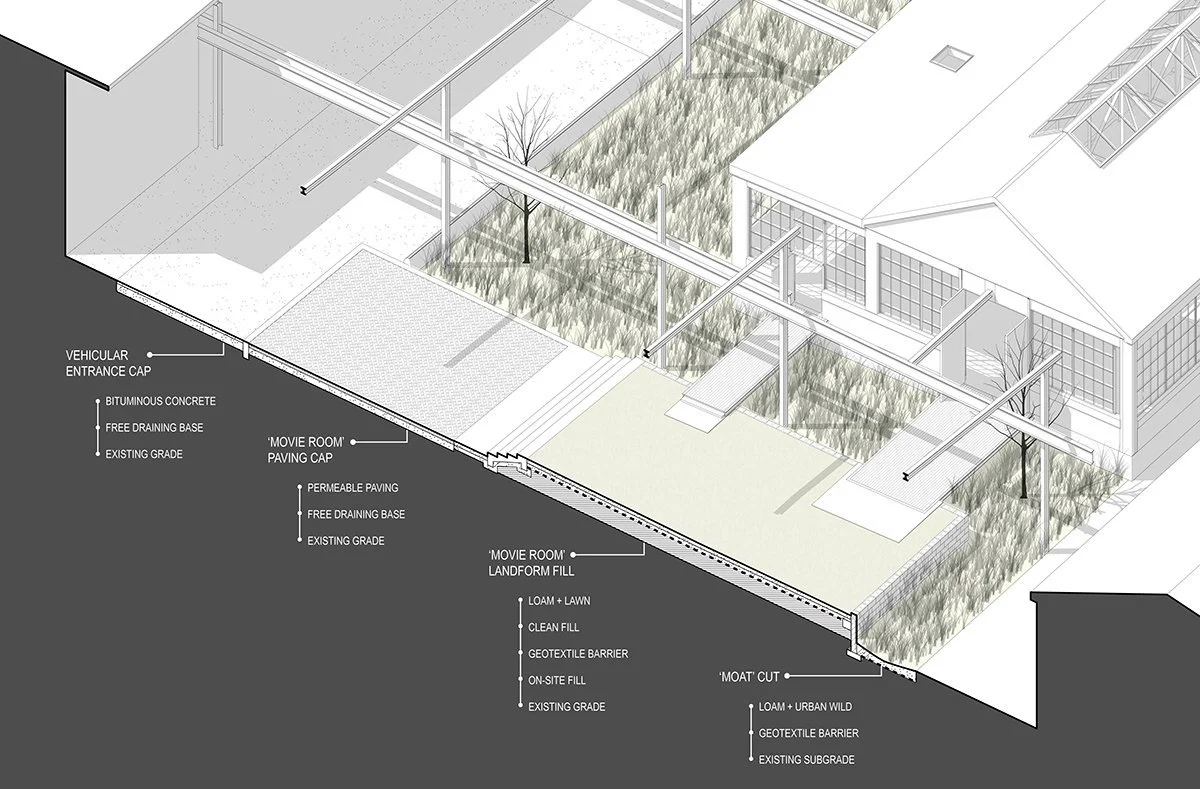
As part of the Narragansett Bay watershed, an important sustainability goal was to keep and filter as much stormwater on site as possible. The Steel Yard infiltrates 90% of annual rainfall through a system of bioswales and permeable surfaces. Accommodating this functionality while ensuring that contaminated soil does not leach off-site involves a process of directing infiltration and controlling its volume. While the site’s existing conditions and the involvement of regulatory agencies necessitated a sustainable approach, an ethic of sustainability permeated throughout the project and informed the planting strategy and use of recycled materials.
Bringing Order to an Urban Wild
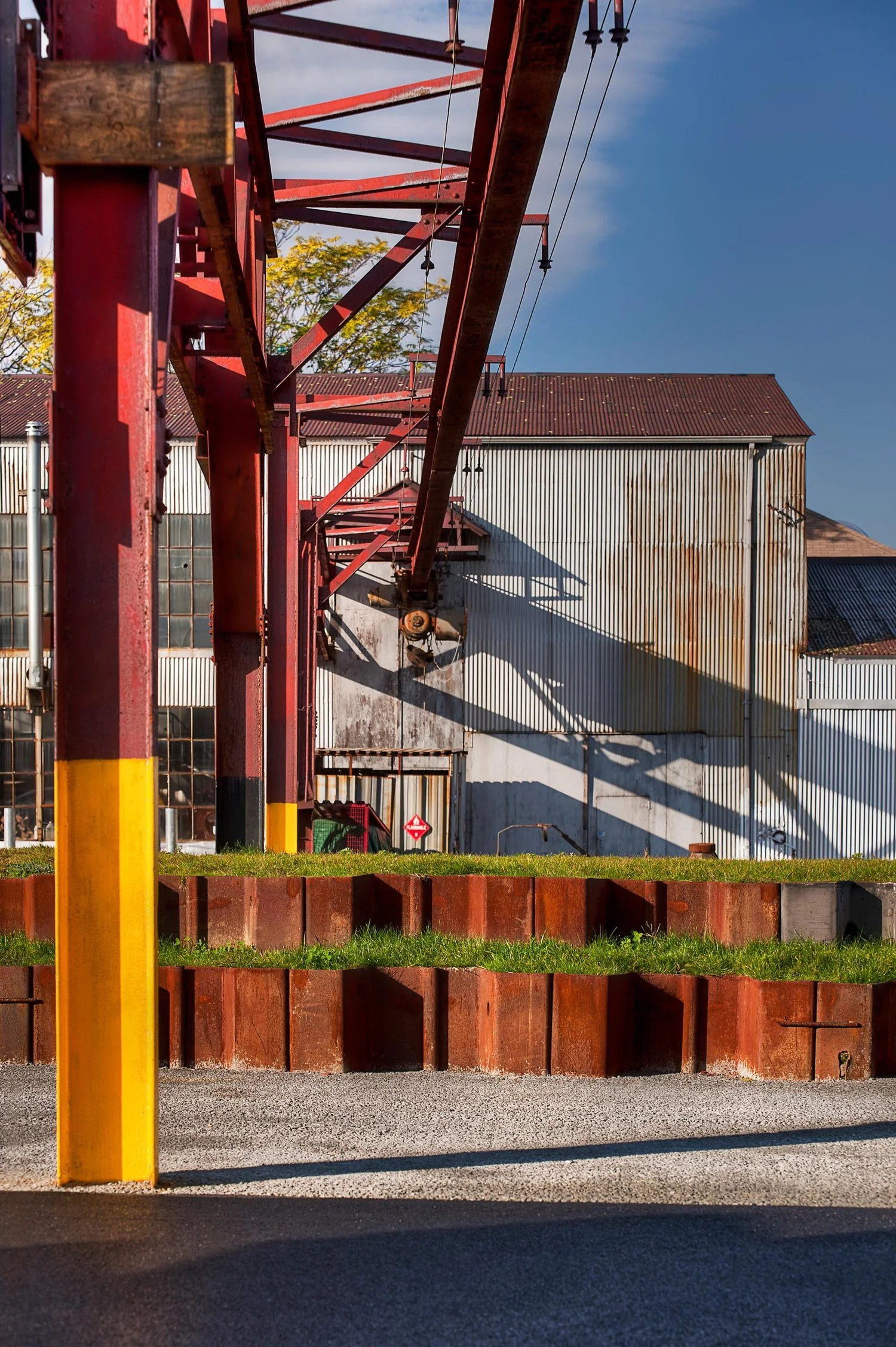
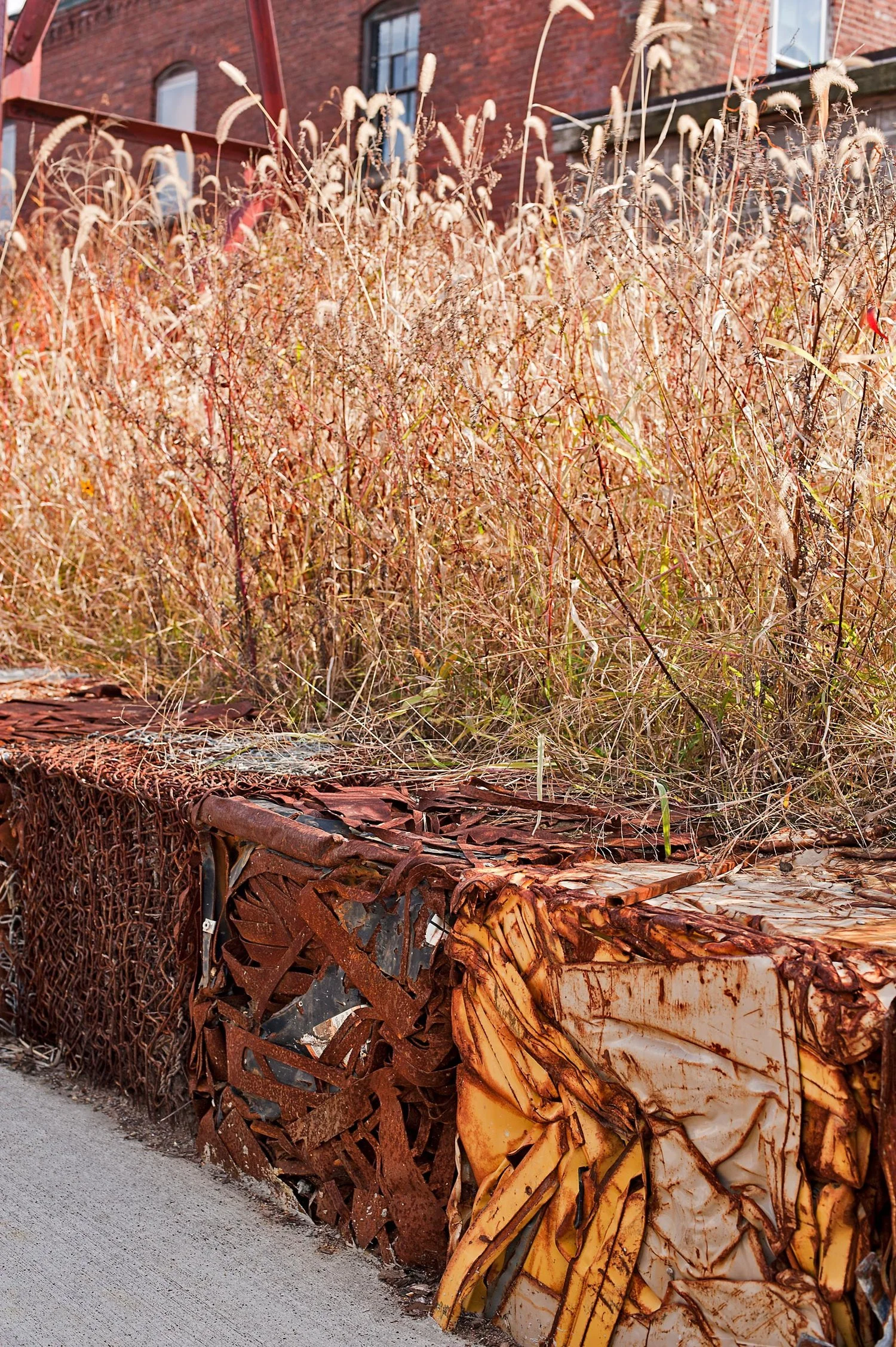
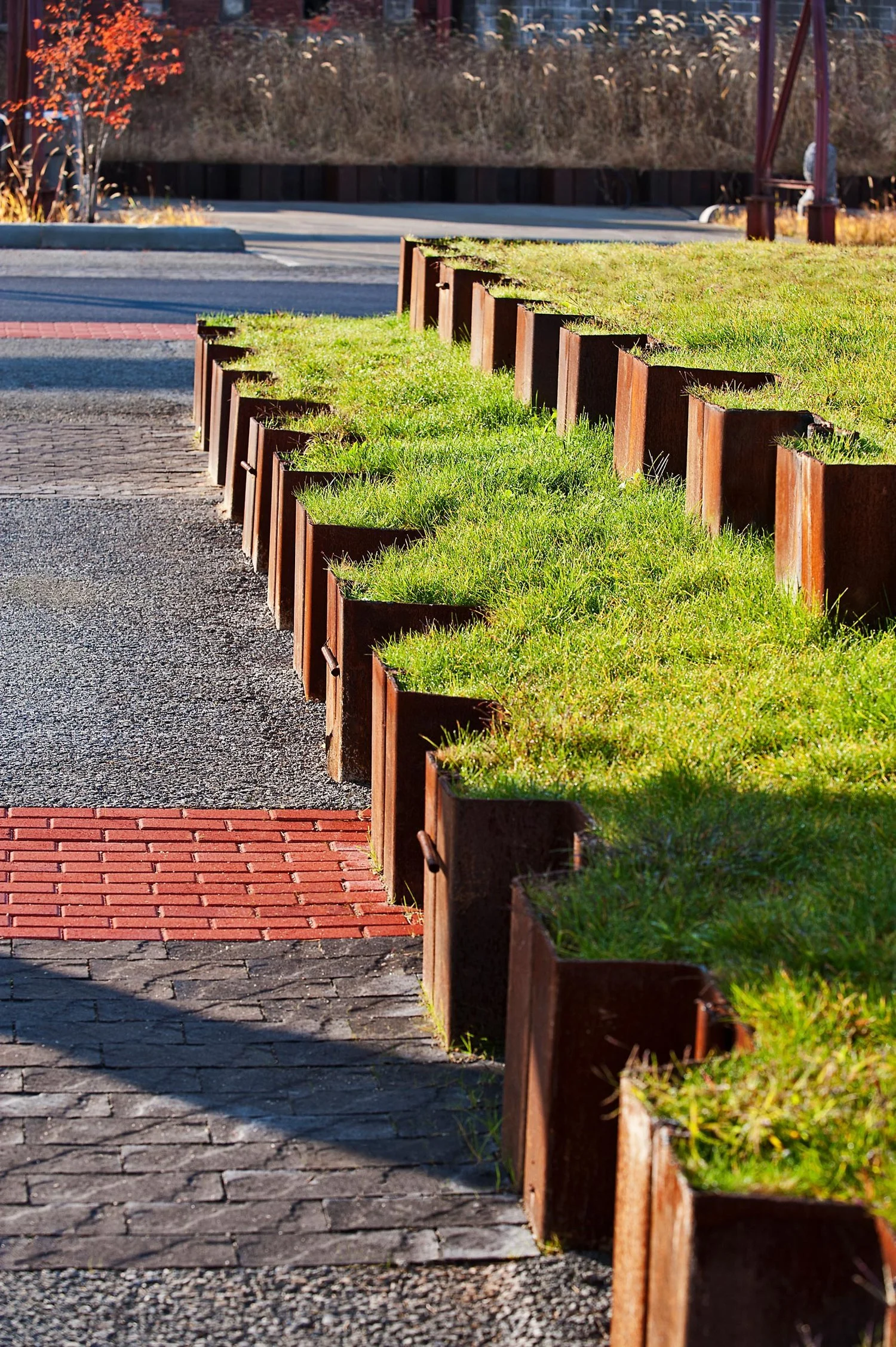
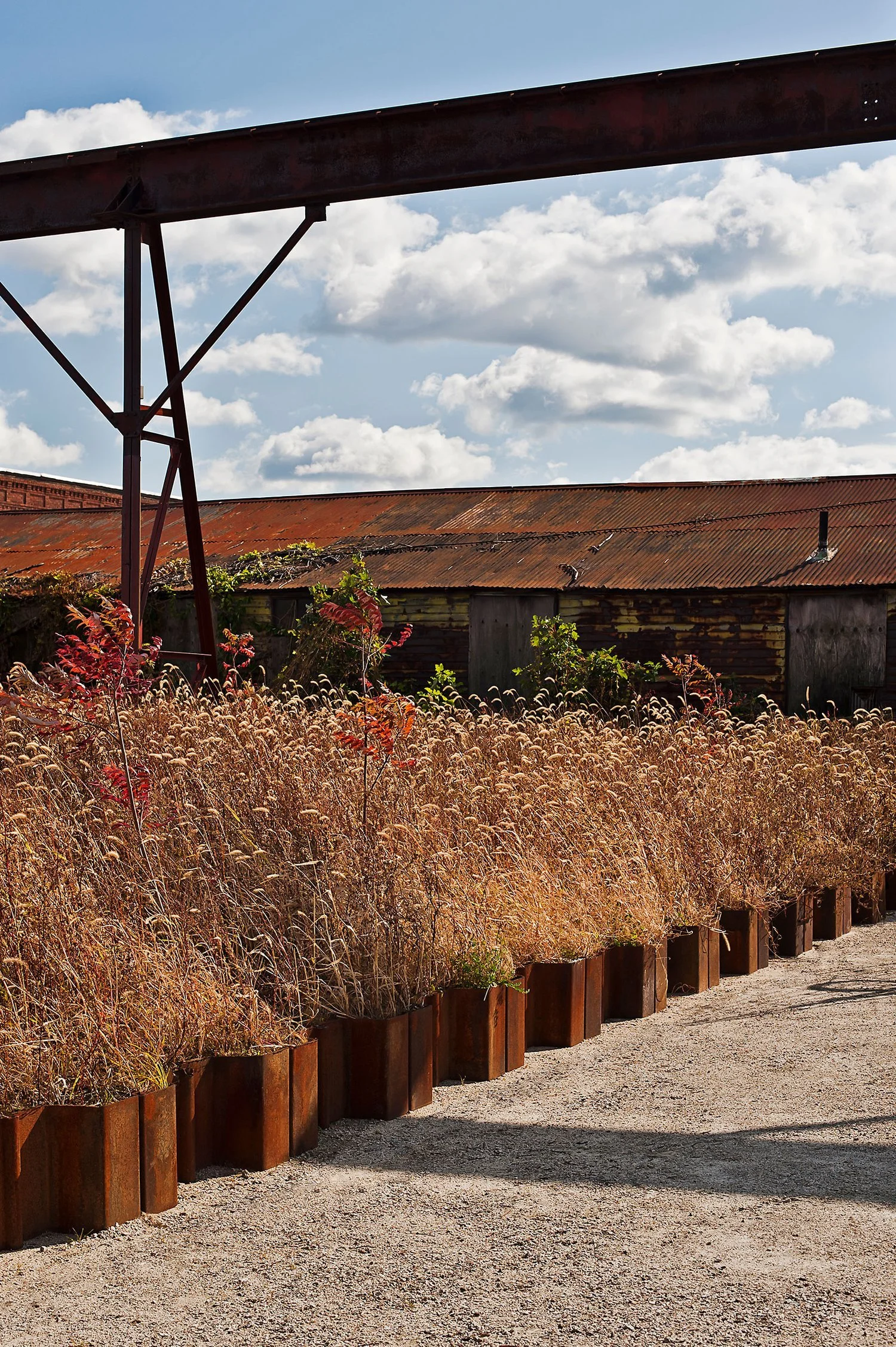
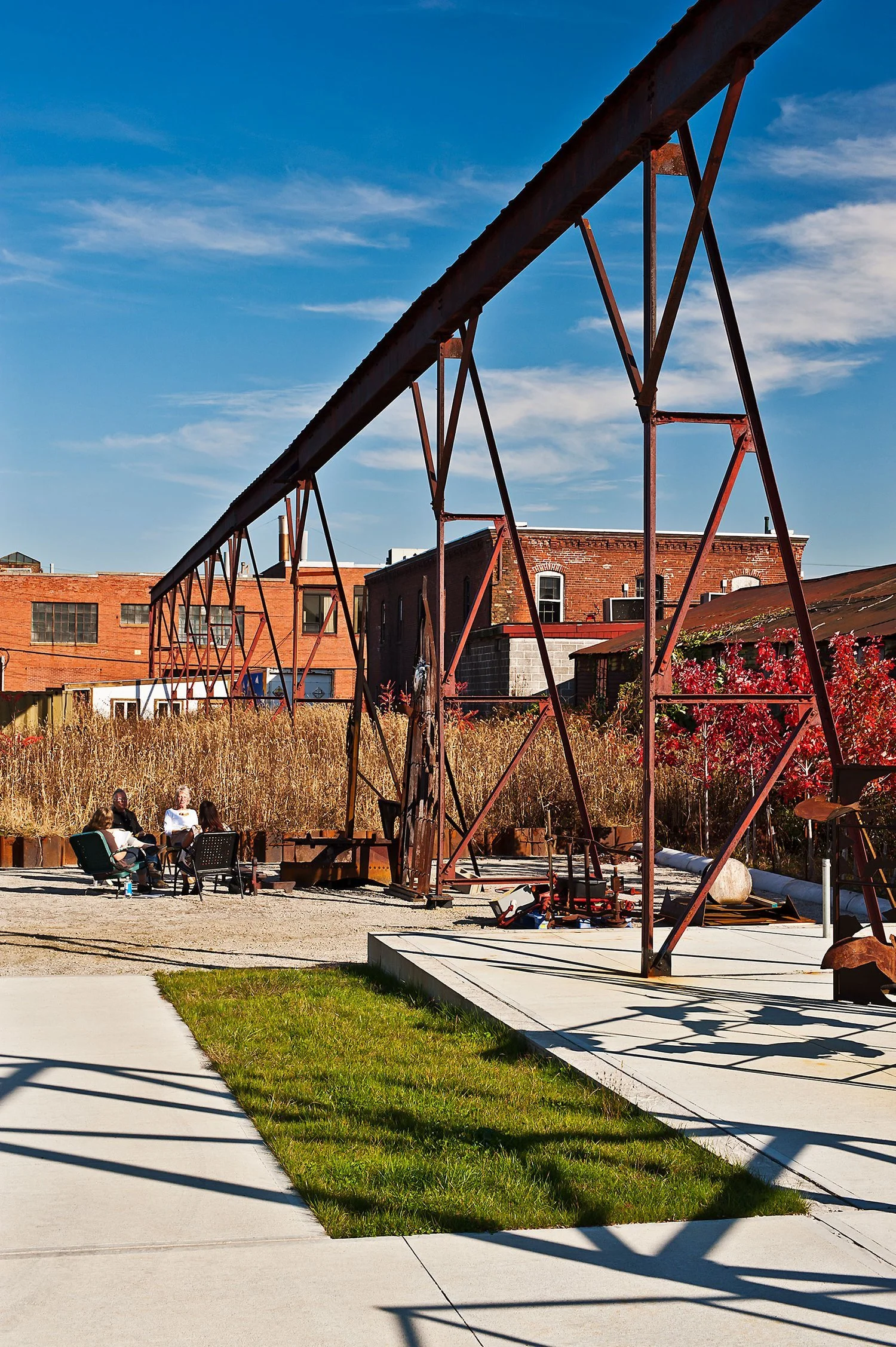
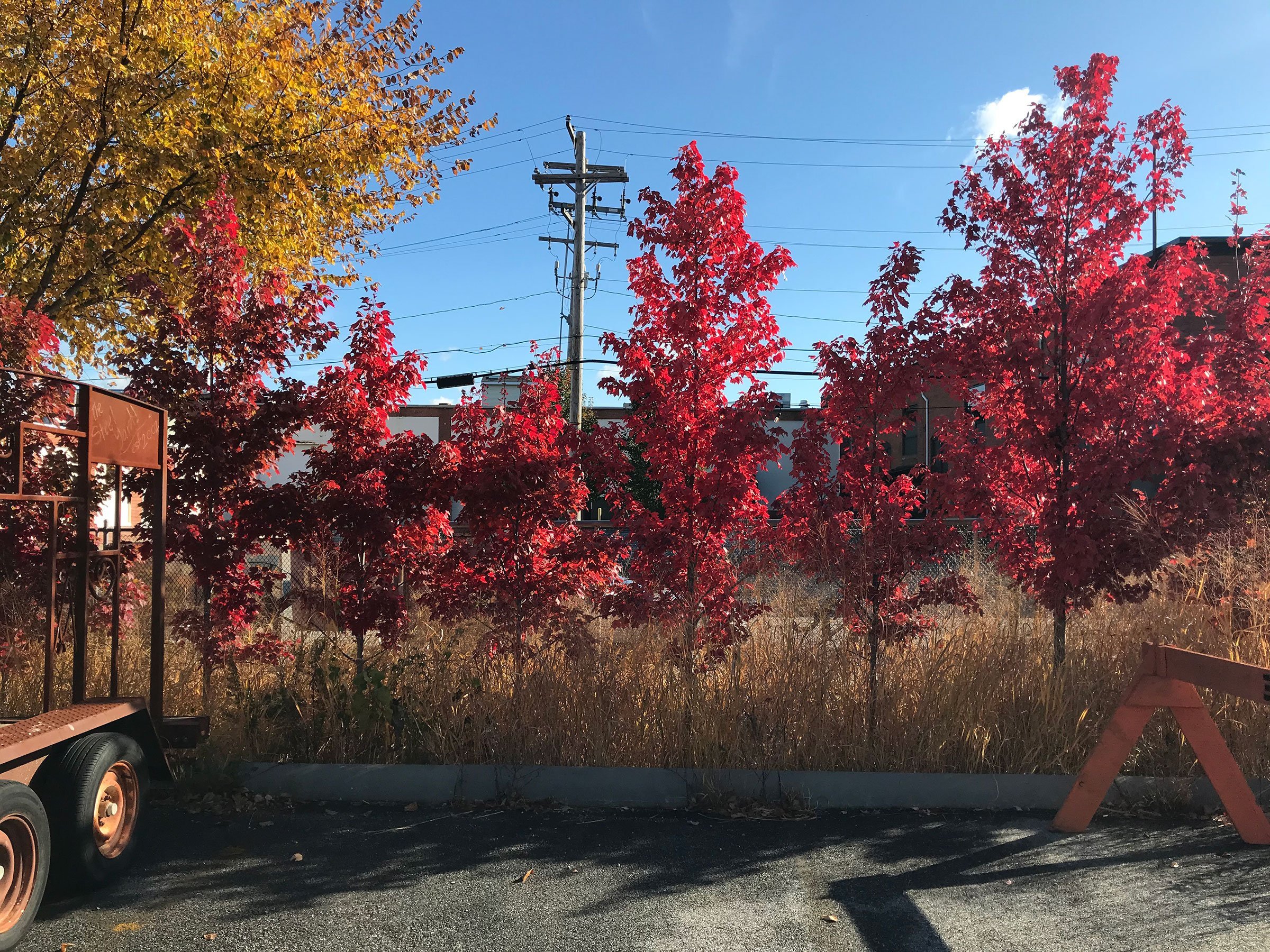
Design details throughout the project make use of uncommon recycled materials (e.g. discarded sheet pile culled from waste of other construction sites and scrap metal bales of bicycles, appliances, and car parts) and are featured as prominent site elements. Permeable pavement and bioswales are employed creatively both as sustainable strategies and as design features.
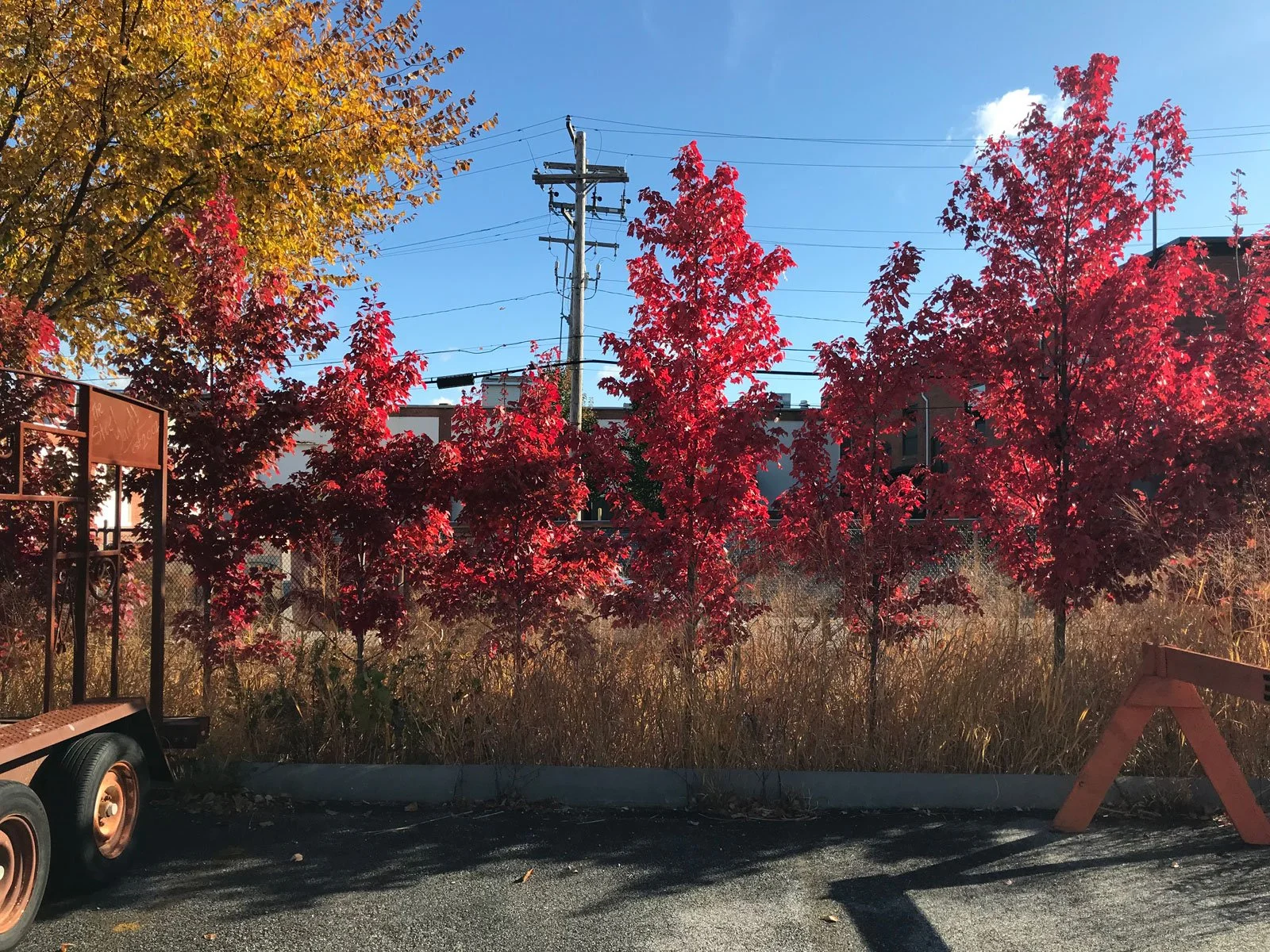
The planting plan follows the design intent of recreating an urban wild. The ‘moats’ were filled with water-loving plants to filter stormwater and prevent erosion of the swales, but more importantly, to establish vegetation across the site in areas not conflicting with events or fabrication. Landform areas are also planted according to their program—the central landform and ‘movie room’ with turf to allow spectator seating or everyday lounging of ‘Yardies’, and the southern landform with sumac and grasses to enclose the main space and screen adjacent properties. Native pioneer and volunteer species were introduced in the original planting, and are expected to re-colonize the site, restoring the abandoned site’s existing condition—a leafed oasis in its industrial context.
A National Historic Register Site
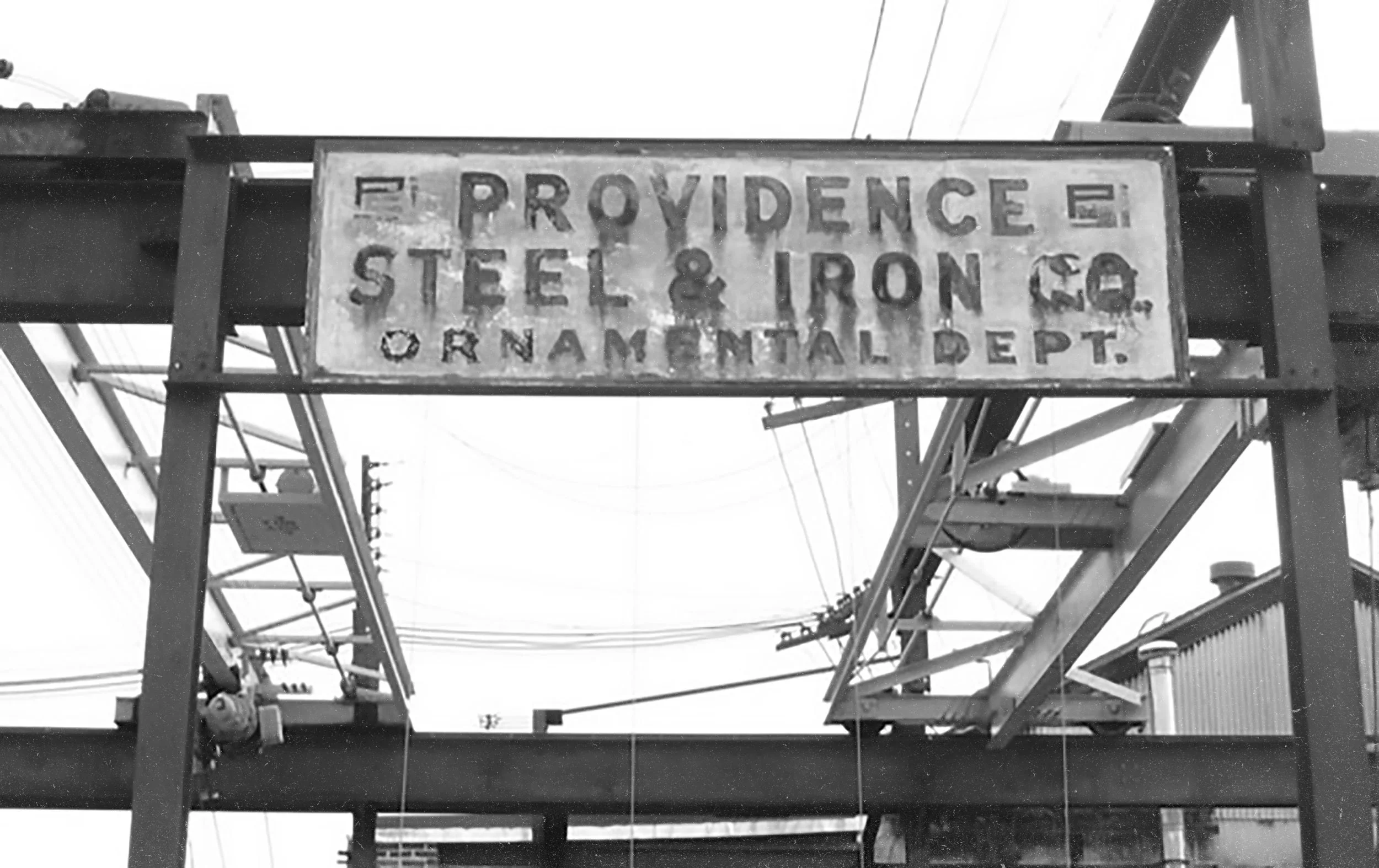
The final project meets the preservation standards required of a National Historic Register site and leads by example in its innovative design for passive, on-site stormwater management. Today, the Steel Yard is a reclaimed urban landscape representing the neighborhood’s industrial history while offering a campus for industrial arts education, workforce training, and small-scale manufacturing. In addition, the Steel Yard is a lead partner in the intentional reclamation of Providence's "Industrial Valley" and serves as a modern, publicly accessible, de facto park.
Project Awards
2013 Silver Medal, Rudy Bruner Award for Urban Excellence
2012 Brownfield Redevelopment + Renewal, Gold Standard Social Impact Award
2012 Senator John Chafee Conservation Leadership Award, Environmental Council of RI
2011 Honor Award, American Society of Landscape Architects
2011 Honor Award, Boston Society of Landscape Architects
2011 Rhody Award, Preserve RI & RI Historic Commission
2011 Great Places Design Award, Environmental Design Research Association
2010 Providence Preservation Society Award


